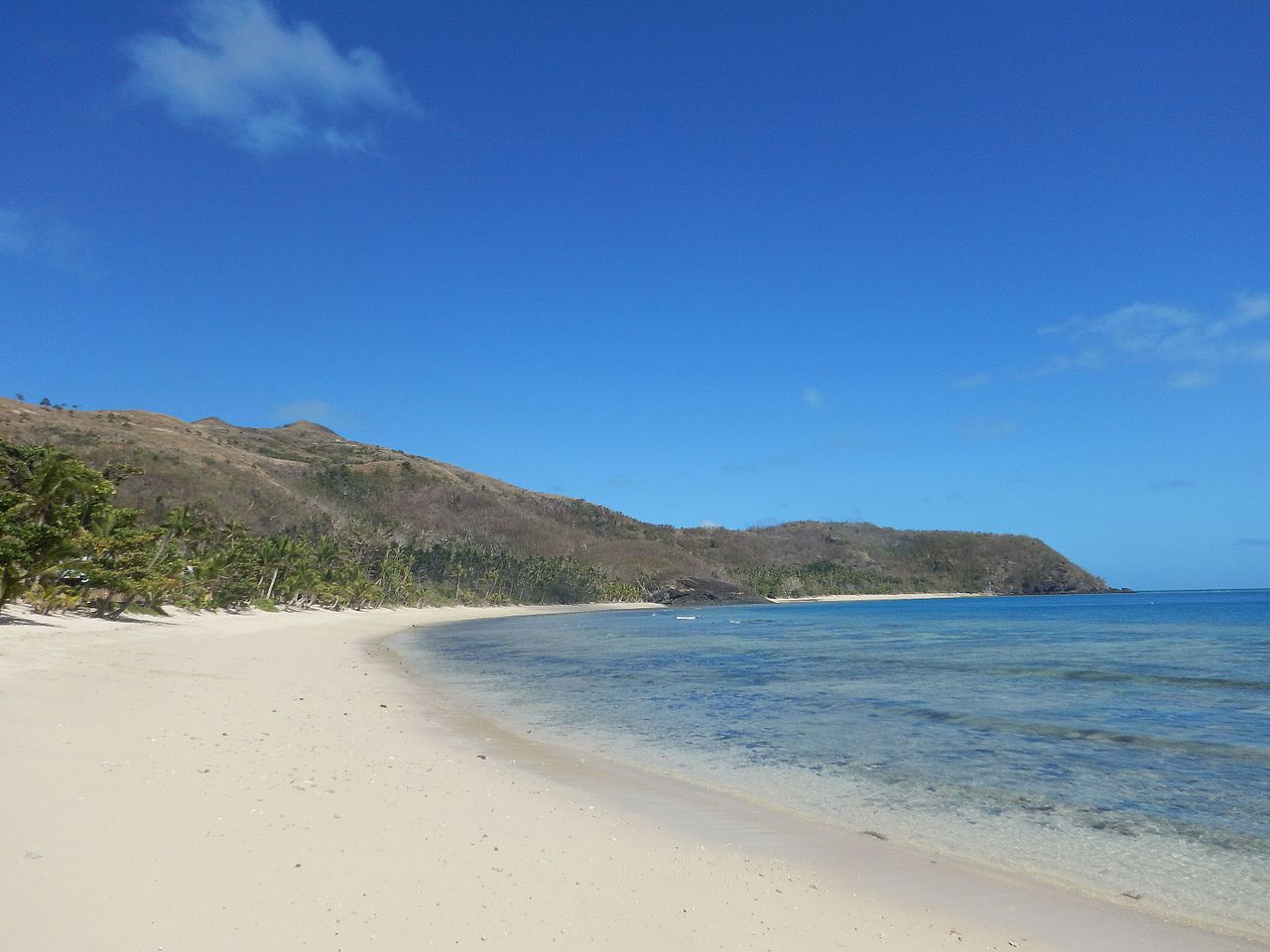
Fiji anchors the South Pacific in most travelers' minds, but the archipelago itself is only a starting point: 333 islands scattered across a swath of ocean, with roughly a third inhabited and the rest ranging from tiny motus to substantial, mountainous landmasses. Beyond Fiji, neighboring island nations and territories — the Cook Islands, Samoa, Vanuatu, French Polynesia — each offer their own variation on the same broad promise of warm water, coral reefs, and a slower pace of life, making the wider South Pacific a region best understood as a collection of distinct cultures rather than an interchangeable postcard backdrop.
Fiji's Main Islands: Viti Levu and Vanua Levu
Viti Levu, Fiji's largest island, holds the majority of the population along with the capital, Suva, a genuinely working city rather than a resort town, and Nadi, the main international gateway, whose surrounding area holds most of the large beachfront resorts visitors picture when planning a Fiji trip. The Coral Coast, along Viti Levu's southern shore, strings together a run of resorts and villages with reasonable reef access directly from the beach, while the interior highlands offer a rougher, more adventurous side of the island, including whitewater rafting on the Navua River and visits to traditional highland villages considerably less oriented toward tourism than the coastal strip. Vanua Levu, Fiji's second-largest island, sees a fraction of the visitors that reach Viti Levu, and its relative quiet — along with the excellent diving around Savusavu and the Namena Marine Reserve — makes it a deliberate choice for travelers who have already done a more conventional Fiji trip and want something with fewer other tourists in the water.
The Mamanuca and Yasawa Islands
A short boat ride from Nadi, the Mamanuca Islands hold Fiji's highest concentration of resorts, ranging from backpacker-friendly bures to high-end private-island properties, all within reach of consistently good snorkeling and, for surfers, the well-known reef break at Cloudbreak. Further north and considerably less developed, the Yasawa Islands string out in a long chain accessible primarily by a scheduled catamaran service that hops between island resorts, offering a quieter, more strung-out itinerary for travelers willing to trade some convenience for a more remote feel. Both island groups depend heavily on the reef systems surrounding them, and Fiji's marine protected areas, along with village-managed tabu (no-fishing) zones that rotate over time, represent a genuinely community-driven approach to reef management that predates and complements the country's more formal conservation efforts.

Fijian Culture: Villages, Kava, and the Meke
Fijian culture runs on a set of customs still very much alive rather than performed solely for visitors, and travelers invited into a village, particularly for an overnight stay in the interior or on a smaller island, will likely encounter a sevusevu ceremony, in which a visitor presents a gift of kava root to the village chief as a mark of respect before being formally welcomed. Kava itself, a mildly sedative drink made from the ground root of the pepper plant, functions as a genuine social ritual rather than a tourist novelty, drunk communally from a shared bowl with its own sequence of claps and phrases. Traditional meke performances, combining dance, chant, and storytelling to recount historical events or legends, appear at cultural evenings across the resort circuit, and while these performances are staged for visitors, many retain real choreographic and narrative substance rather than being reduced to generic tropical spectacle.
Beyond Fiji: The Wider South Pacific
The Cook Islands, particularly Rarotonga and Aitutaki, offer a smaller-scale, less commercially developed alternative to Fiji, with Aitutaki's lagoon — a shallow, brilliantly turquoise expanse dotted with tiny motu islets — regularly ranked among the most beautiful lagoons anywhere in the world. Samoa preserves a traditional fa'a Samoa (Samoan way) village structure more visibly than many of its neighbors, with beach fale accommodation — simple open-sided huts steps from the sand — offering a deliberately unpolished alternative to resort infrastructure. Vanuatu, west of Fiji, holds a rawer, more geologically active landscape, including the accessible Mount Yasur volcano on Tanna Island, one of the few volcanoes in the world where visitors can stand at the crater rim and watch active eruptions. French Polynesia, encompassing Tahiti, Bora Bora, and the Marquesas, sits at the more expensive end of the South Pacific spectrum, its overwater bungalow resorts on Bora Bora's lagoon having become one of the defining images of tropical luxury travel worldwide.
Diving and Marine Life
The South Pacific's reef systems support an exceptional density of marine life, and Fiji in particular has built a reputation as the soft coral capital of the world, with sites around Taveuni and the Somosomo Strait displaying corals in a range of colors considerably more vivid than the hard coral reefs more common elsewhere in the Pacific. Shark diving off Beqa Island, where operators run baited dives bringing divers within close range of bull sharks and several other species, has become one of Fiji's signature dive experiences, conducted under strict protocols developed with local marine biologists and generating income that has helped justify protecting the surrounding reef from fishing. Manta ray encounters, seasonal but reliable in spots like the Yasawa's Drawaqa Island, and the annual coral spawning events that draw specialist dive trips to witness a single dramatic night of mass reproduction, round out a diving scene that ranks among the most consistently rewarding in the world for both beginners and highly experienced divers.
When to Go and Practical Notes
The South Pacific's dry season, roughly May through October, brings the most reliable weather across Fiji and most neighboring island nations, with lower humidity and reduced risk of the cyclones that can affect the region between November and April. Interisland travel within Fiji runs via a combination of domestic flights, ferries, and, for the outer islands, chartered boats, and travelers planning to combine several island nations in one trip should budget realistically for the flight connections involved, since the South Pacific's islands are separated by considerable stretches of open ocean rather than the short island-hopping distances of, say, the Caribbean. Currency and costs vary significantly by country, with French Polynesia in particular running notably more expensive than Fiji or the Cook Islands, largely due to its status as a French territory. Respecting local customs — modest dress in villages, removing hats and sunglasses during formal greetings, and following a host's lead during any kava ceremony or village visit — goes a long way toward the kind of genuine cultural exchange that distinguishes a thoughtful South Pacific trip from one that treats the region as simply a beautiful, interchangeable backdrop.