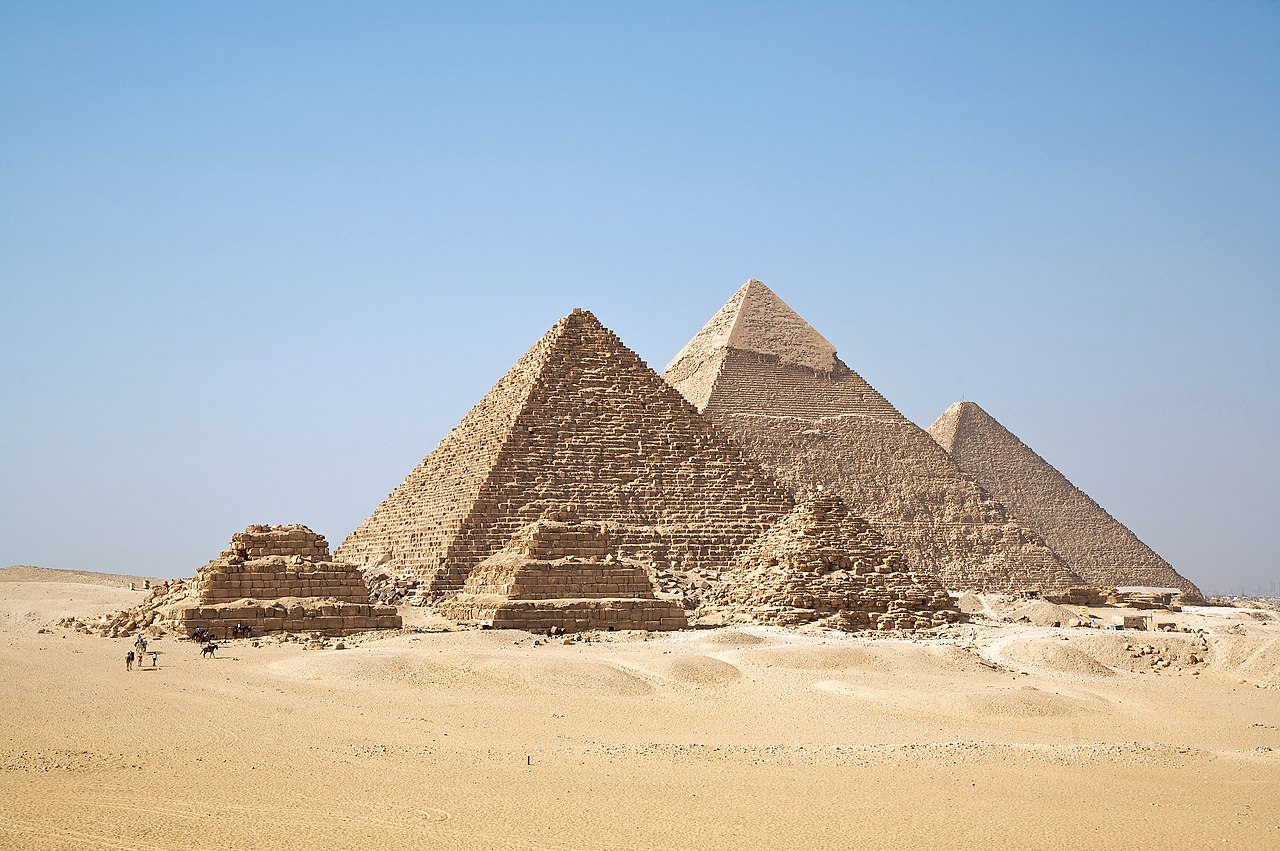
Egypt tends to get compressed in people's imaginations into a single image, the Pyramids of Giza rising out of the desert on the edge of Cairo, but that's really the trailer for a country that offers at least three distinct trips depending on how you structure it. There's the ancient-Egypt trip, following the Nile south through 5,000 years of temples and tombs; there's the Cairo trip, a sprawling, chaotic megacity that rewards visitors who give it more than a rushed day; and there's the Red Sea trip, which has almost nothing to do with pharaohs and everything to do with world-class coral reefs and wreck diving. A well-planned two-week itinerary can string all three together, but it helps to know what each segment actually involves before building the trip.
Cairo and Giza: chaos, then calm
Cairo is not a gentle introduction to Egypt. Traffic is constant and largely theoretical in its adherence to lanes, the call to prayer echoes across a skyline of unfinished brick apartment blocks, and the city's twenty-plus million residents mean crowds are a fact of life almost everywhere. But the payoff is enormous: the Egyptian Museum in Tahrir Square (or increasingly, the new Grand Egyptian Museum near Giza, which has been opening in phases) holds the single greatest collection of pharaonic artifacts on earth, and the Pyramids of Giza themselves, along with the Sphinx, sit at the edge of the city rather than in some remote desert outpost, which makes the scale genuinely disorienting the first time you see apartment blocks in the same frame as a 4,500-year-old wonder of the ancient world.
Giving Cairo two full days rather than a rushed layover pays off. One day for Giza and the nearby step pyramid complex at Saqqara, considered the earliest large-scale stone building in history; a second for the museum, the medieval quarter around Khan el-Khalili bazaar, and the Citadel with its Ottoman-era mosque overlooking the whole city. Hiring a licensed driver or guide for the Giza and Saqqara day removes most of the hassle around persistent touts at the pyramid complex, which can otherwise wear down an unprepared visitor fast.
The Nile: temples, tombs and a slow boat south
The classic way to see the rest of ancient Egypt is a Nile cruise between Luxor and Aswan, a roughly four-day journey (in either direction) that stops at some of the most significant archaeological sites on the planet. Luxor alone justifies the trip: the Valley of the Kings, where Tutankhamun's tomb and dozens of other royal burial sites are cut into the desert cliffs, sits across the river from Karnak Temple, an almost incomprehensibly vast complex of columns, obelisks and sacred lakes built up over 2,000 years by successive pharaohs. Aswan, the southern endpoint, offers a gentler pace, Nubian villages, the beautiful Philae Temple relocated onto an island to save it from flooding, and (with an early flight or overnight add-on) access to Abu Simbel, Ramesses II's colossal rock-cut temple near the Sudanese border.
Cruise boats range from budget to genuinely luxurious, and a felucca (traditional sailboat) segment is a popular and much cheaper alternative or add-on for travelers who want a slower, quieter few hours on the river without the full multi-day cruise price tag. Whichever option, doing the Nile leg between October and April avoids the brutal summer heat, when daytime temperatures in Upper Egypt routinely exceed 40°C.
The Red Sea: reefs, wrecks and warm water year-round
The third leg of an Egypt trip has nothing to do with temples. Hurghada and, especially, the smaller and more laid-back Dahab and Sharm El Sheikh, sit on the Red Sea coast and offer some of the most accessible world-class diving and snorkeling anywhere, thanks to warm water, minimal currents in many sites, and reef systems that survived relatively intact compared to more heavily trafficked dive destinations elsewhere. The SS Thistlegorm, a WWII supply ship sunk near Ras Muhammad and now one of the most famous wreck dives on the planet, draws serious divers from around the world, while the shallow, shore-accessible Blue Hole near Dahab (a sinkhole plunging past 100 meters, with a much gentler shallow section) is popular with snorkelers and beginner divers alike.
Non-divers aren't left out: the Red Sea coast's warm water, reliable sun and beach resorts make it a straightforward add-on for anyone wanting a few days of pure relaxation after the more demanding, culturally intense Cairo-and-Nile segment of the trip. Flights connect Hurghada and Sharm El Sheikh directly to Cairo in under an hour, so bolting on three or four beach days at the end is logistically easy.
Practical notes: visas, timing and getting around
Most nationalities can get an Egyptian e-visa online in advance or a visa on arrival at the airport, and both are generally straightforward, though checking current requirements before departure is worth the five minutes it takes. Domestic flights connect Cairo, Luxor, Aswan and the Red Sea resorts quickly and cheaply, and are usually a better use of time than the overnight trains, though the trains have their own old-world charm for travelers not in a rush. October through April is peak season for good reason: daytime temperatures across the Nile Valley and Cairo are comfortable rather than punishing, whereas June through August pushes well past what's pleasant for a day of temple-hopping in direct sun.
Egypt runs almost entirely on cash for smaller vendors, tips (baksheesh) are a genuine and expected part of daily transactions from guides to bathroom attendants, and dressing modestly, especially for women, smooths interactions considerably outside the resort areas. None of this is a reason to overthink the trip; it's simply useful to know going in, so the logistics stay in the background and the pyramids, temples and reefs stay in the foreground.
What to eat along the way
Egyptian food rarely gets top billing next to the monuments, which is a shame, because it's genuinely good and cheap almost everywhere. Koshari, a carb-heavy street-food staple of rice, lentils, macaroni and crispy fried onions topped with a spiced tomato sauce, is the closest thing Egypt has to a national dish and a reliable, filling lunch for a dollar or two. Ful medames (slow-cooked fava beans) and taameya (Egyptian-style falafel, made with fava beans rather than chickpeas) show up at breakfast tables from Cairo to Aswan, and fresh-pressed juice stands selling sugarcane, mango or hibiscus (karkade, served hot or cold) are everywhere and worth stopping for on a hot afternoon between temples.