
The Faroe Islands: Where the Edge of the World Feels Like Home
Gaurav Kumar
16 Feb 2026 • 7 min read
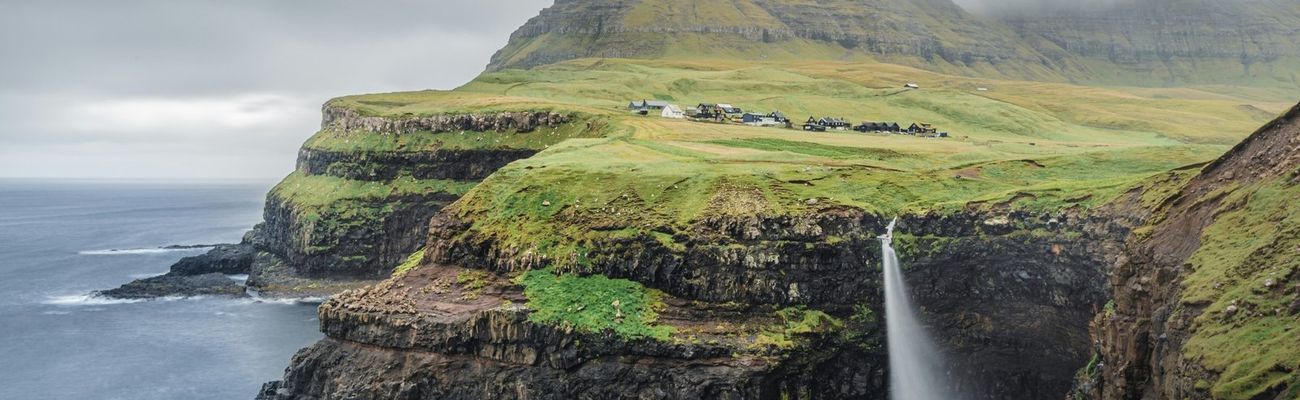
There are places that exist in photographs like myths—too dramatic to be real, too remote to be accessible. The Faroe Islands were that place for me, until I found myself standing on a cliff edge at Múlafossur, watching a waterfall plunge directly into the North Atlantic while puffins wheeled overhead in the salt-thick air.
This scattered archipelago of 18 volcanic islands, suspended between Iceland and Norway in the churning seas, isn't just off the beaten path. It's off the map entirely for most travelers. And that's exactly why you need to go.
Why the Faroe Islands Should Be Your Next Adventure
Forget the crowds of Iceland or the cruise ship ports of Norway. The Faroes offer something increasingly rare: genuine discovery. With a population of just 50,000 people and more sheep than humans, these islands feel like stepping into a Nordic fairy tale written by the ocean itself.
The landscape is almost violently beautiful. Grass-roofed houses cling to hillsides. Sheer cliffs drop 400 meters into the sea. Waterfalls appear around every curve in the road, and on any given day, you might experience four seasons in an hour. The weather here doesn't change—it performs.
Getting There and Getting Around
The journey begins with a flight into Vágar Airport, which might just be the most dramatically situated airport you'll ever land at, perched between mountains and fjords. Atlantic Airways connects the Faroe Islands to Copenhagen, Reykjavik, and several European cities.
Here's my hard-won advice: rent a car. The islands are connected by tunnels, bridges, and ferries, and public buses exist, but having your own wheels means freedom to chase the light, pull over for spontaneous hikes, and reach remote villages when the mood strikes.
The sub-sea tunnels are engineering marvels and minor adventures in themselves. The Eysturoy Tunnel even features a roundabout 72 meters below sea level, illuminated with art installations that transform the drive into something otherworldly.
Must-Visit Destinations
Tórshavn: The World's Smallest Capital with the Biggest Heart
Start in Tórshavn, where colorful houses line the harbor and grass grows on rooftops like nature refuses to let go. The old town of Tinganes, with its black-tarred wooden buildings, has been the seat of government since Viking times. Wander the narrow lanes, grab coffee at Paname Café, and feel the pulse of Faroese culture.
Gásadalur and Múlafossur Waterfall: The Poster Child
This is the image that probably lured you here—the waterfall cascading off a cliff into the ocean, with the tiny village of Gásadalur nestled in a green valley. Before 2004, this village was only accessible by helicopter or an arduous hike over the mountains. Now a tunnel makes it reachable, but it's lost none of its magic. Arrive at sunset if you can. The light turns everything golden.
Saksun: A Village at the End of Time
Drive north to Saksun, where a few turf-roofed houses sit beside a tidal lagoon surrounded by towering peaks. It feels like the last place on Earth. The 19th-century farmhouse museum sits almost comically picturesque against the backdrop of mountains. Time your visit for low tide when you can walk out into the lagoon.
Vestmanna Bird Cliffs: Where the Wild Things Nest
Take a boat tour from Vestmanna and cruise along sea cliffs that rise like cathedral walls from the water. Tens of thousands of seabirds—guillemots, fulmars, kittiwakes—nest in the cliffs. The boat ventures into sea grottoes and beneath natural arches while birds circle overhead. It's primal and magnificent.
Mykines: The Puffin Paradise
If you make only one side trip, make it Mykines. This westernmost island requires a helicopter or ferry (book well in advance), then a hike to the lighthouse at the island's edge. The payoff? Puffins. Thousands of them. They nest in burrows, stand on cliff edges, and waddle past you on the trail with endearing indifference. Remember: these birds are wild. Respect their space, stay on marked paths, and resist the urge to get too close for photos.
Gjógv: The Gorge by the Sea
This village takes its name from the 200-meter-long gorge that cuts through it to the sea, once used as a natural harbor. Hike up to the cliffs above town for views that will ruin you for other landscapes. The contrast between the sheltered gorge and the wild ocean is stark and beautiful.
The Hikes That Will Change You
The Faroe Islands are a hiker's fever dream. Trails range from easy coastal walks to serious mountain treks, but all share one thing: views that punch you in the chest.
Kallur Lighthouse on Kalsoy
The trail to this lighthouse involves a steep, muddy climb over a mountain pass, but reaching the cliff edge where the lighthouse perches is worth every slippery step. The views over the northern islands are absolutely unreal. Go early or late to avoid crowds, and be prepared for wind that could knock you sideways.
Slættaratindur: The Rooftop of the Faroes
At 880 meters, this is the highest peak in the archipelago. On a clear day (admittedly rare), you can see all 18 islands from the summit. The hike is moderate but exposed, and weather can change in minutes. I reached the top in sunshine and descended through fog so thick I couldn't see my own feet. Exhilarating.
Bøsdalafossur and Lake Sørvágsvatn
This optical illusion of a lake appears to float above the ocean. The hike from Miðvágur takes you along the cliff edge to Bøsdalafossur waterfall, where the lake drains into the sea. The perspective is mind-bending—one of those rare places where reality seems Photoshopped.
When to Go
Summer (June to August) brings near-endless daylight, with the sun barely setting during the lightest weeks. The islands turn impossibly green, and this is peak season for puffins and festivals. But it's also the busiest time.
I went in September and found a sweet spot: fewer tourists, dramatic weather, and landscapes painted in autumn gold. The puffins had left, but the trade-off was solitude and spectacular storms rolling across the islands.
Winter is dark and wild, with powerful seas and frequent closures, but if you want raw, elemental beauty and near-total isolation, it has its own fierce appeal.
Practical Wisdom from the Field
Weather: Check yr.no obsessively. Conditions change by the hour. I packed for every season and used every layer I brought. Waterproof everything is non-negotiable.
Food: Faroese cuisine celebrates local ingredients—lamb, fish, seabirds (yes, really). KOKS, the Michelin-starred restaurant, offers an unforgettable tasting menu in a remote grass-roofed setting. For budget travelers, grocery stores in Tórshavn are your friend. Eating out is expensive.
Respect the Land: This is crucial. Stay on marked paths, close all gates, and never disturb sheep or nesting birds. The environment here is fragile, and locals are rightfully protective. Leave no trace isn't just good practice—it's essential.
Accommodation: Book early. Options range from hotels in Tórshavn to guesthouses in remote villages to Airbnbs. I stayed in a converted boathouse in Gjógv and woke to the sound of waves echoing in the gorge below.
The Farewell
My last evening in the Faroes, I stood on a hilltop above Tjørnuvík as rain swept across the valley in sheets. The two sea stacks of Risin and Kellingin rose from the ocean like giants frozen in stone—which, according to legend, they are. The light broke through the clouds in shafts, illuminating the village below in brief, golden moments.
The Faroe Islands don't reveal themselves easily. They make you work for it—climbing muddy trails, driving through tunnels beneath the sea, braving weather that seems personally affronted by your presence. But the reward is a connection to landscape and wildness that feels increasingly rare in our curated, crowded world.
These islands will challenge you, humble you, and probably soak you to the bone. And you'll leave planning your return before your flight home even takes off.
Essential Information
Currency: Danish Krone (DKK) Language: Faroese, but English is widely spoken Driving: Right-hand side, roads are good but can be narrow and winding Budget: Expensive, similar to Iceland or Norway. Plan accordingly. WiFi: Surprisingly good across the islands
The edge of the world is closer than you think. It's waiting in the North Atlantic, covered in grass, surrounded by cliffs, and absolutely worth the journey.